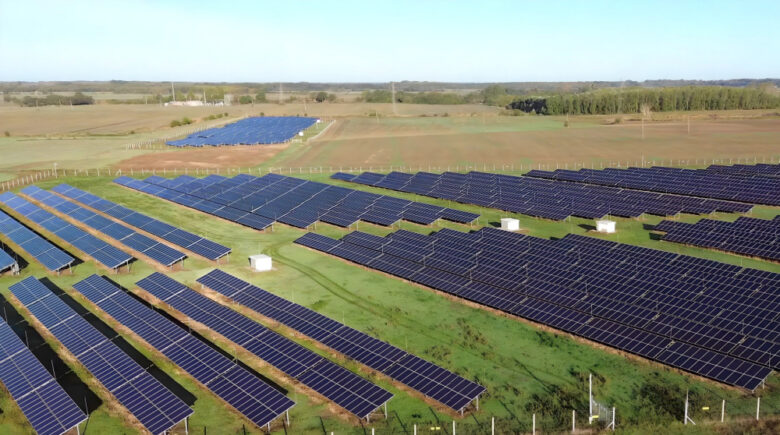
From Alaska to sub-Saharan Africa, remote communities are ditching fragile power lines for something more resilient. As Wall Street money and AI-driven energy systems pour in, microgrids are becoming a lifeline — and a warning sign for the future of the traditional grid.
Why the Power Problem Is Reaching a Breaking Point
When the power goes out in a major city, it’s an inconvenience. When it goes out in a remote community, it can be catastrophic.
Across rural America, island nations, mining towns, and Indigenous communities, electricity has long depended on aging transmission lines, diesel generators, or a single fragile connection to the main grid. One storm, one equipment failure, or one fuel shipment delay can plunge entire regions into darkness for days — sometimes weeks.
That’s why microgrids, once considered a niche solution for military bases and research campuses, are now at the center of a quiet energy shift. Powered by solar, wind, batteries, and increasingly AI-driven controls, microgrids are giving remote communities something they’ve rarely had: control.
And the timing couldn’t be more urgent. Climate volatility, rising fuel costs, and renewed infrastructure spending are forcing governments and investors to rethink how power is generated — and who gets left behind when the grid fails.
The Quiet Expansion of Localized Energy Systems
Over the past two years, microgrid deployment in remote and underserved regions has accelerated sharply. Federal funding in the U.S., climate finance from development banks, and private capital from energy investors have converged around one idea: localized power systems are no longer experimental — they’re essential.
In the United States, the Department of Energy has expanded grants for community microgrids in Alaska, tribal lands, and wildfire-prone regions of the West. These projects pair renewable generation with battery storage, allowing communities to disconnect from the main grid when disruptions occur.
Globally, the momentum is even more pronounced. Island nations in the Caribbean and Pacific are deploying solar-plus-storage microgrids to replace diesel imports. In parts of Africa and South Asia, microgrids are leapfrogging traditional grid expansion altogether, delivering first-time electricity access to millions.
What’s new isn’t just the technology — it’s the economics. Battery costs have fallen dramatically, AI-based energy management systems are optimizing supply and demand in real time, and investors are beginning to see microgrids as stable, infrastructure-like assets rather than risky experiments.
What Microgrids Change for Communities, Markets, and Utilities
For remote communities, the impact is immediate and tangible.
Reliability comes first. A microgrid can operate independently from the main grid, meaning storms, wildfires, or upstream failures no longer dictate whether hospitals, water systems, or communications stay online. In regions where outages were once routine, consistent power changes daily life — from healthcare delivery to school attendance.
Costs are the next shift. Diesel-dependent communities have historically paid some of the highest electricity rates in the world, vulnerable to fuel price spikes and supply disruptions. Microgrids built around renewables stabilize energy costs over time, insulating communities from global commodity volatility.
There’s also a deeper economic effect. Reliable power enables local businesses, cold storage for food, broadband infrastructure, and modern manufacturing tools. In many rural areas, energy reliability isn’t just about comfort — it’s about whether economic development is possible at all.
Environmental benefits matter too, especially in regions already experiencing the front lines of climate change. Replacing diesel generators with renewables cuts emissions, improves air quality, and reduces the risk of fuel spills in fragile ecosystems.
But the impact extends beyond the communities themselves.
For utilities, microgrids challenge a century-old centralized model. Every community that generates and manages its own power reduces dependence on long transmission lines — assets that are expensive to maintain and increasingly vulnerable to climate stress.
For investors, microgrids are starting to resemble infrastructure plays rather than speculative clean-tech bets. Long-term power purchase agreements, government backing, and predictable demand make them attractive in a world hungry for stable returns.
And for policymakers, microgrids raise a difficult question: if localized systems are more resilient and cost-effective for remote regions, why stop there?
Where Distributed Power Is Headed Next
This is where the story gets bigger.
Advances in AI are transforming microgrids from static systems into adaptive networks. Machine-learning algorithms can forecast weather, predict demand spikes, and optimize battery usage — squeezing more reliability out of the same hardware. What once required constant human oversight is becoming increasingly autonomous.
That technological leap is drawing serious capital. Infrastructure funds and energy majors are quietly increasing exposure to distributed energy, betting that microgrids will become a foundational layer of the future grid rather than a niche alternative.
Governments are watching closely. As extreme weather events strain centralized grids, the logic of decentralization becomes harder to ignore. Microgrids offer a way to harden energy systems without rebuilding every mile of transmission line — an appealing prospect in an era of tight budgets and rising risk.
Still, challenges remain. Upfront costs can be high, regulatory frameworks are often outdated, and ownership models vary widely. Who controls the microgrid — the community, a utility, or a private operator — will shape who benefits most from the transition.
But the direction is clear. What started as a solution for the edges of the grid is moving steadily toward the center of energy policy conversations.
Conclusion
Microgrids aren’t just keeping the lights on in remote communities — they’re exposing the vulnerabilities of the entire energy system.
As climate pressure mounts and infrastructure ages, the traditional grid looks increasingly brittle. Microgrids offer a different vision: smaller, smarter, and closer to the people who depend on them.
For now, the transformation is happening quietly, far from major cities and trading floors. But make no mistake — the lessons being learned in remote communities today may define how power is delivered everywhere tomorrow.
The question isn’t whether microgrids will keep expanding. It’s how long the rest of the grid can afford to ignore them.